Escape Room Strategy Simulator
Current Phase: Pre-Game Setup
Check off roles as you assign them to your team members.
Click on a lock type to reveal the optimal strategy based on common escape room design patterns.
Padlock (Digits)
Strategy: Look for order indicators (arrows/colors) before guessing. Never random guess until logical options are exhausted.
Directional Lock
Strategy: Trace the path physically with your finger. Do not rely solely on mental mapping.
Keyhole Lock
Strategy: Check every container once you find a key. Test it immediately in likely locks.
Combination Wheel
Strategy: Isolate variables. Change one dial at a time to test hypotheses systematically.
You just walked out of an Escape Room feeling like you missed the obvious. You spent twenty minutes staring at a locked box while your friend was holding the key in their pocket. It happens to everyone. The trick isn't about being a genius or having photographic memory. It is about systematic communication and organized chaos management.
Most teams fail because they treat the game like a scavenger hunt instead of a logic puzzle. They grab everything, shout randomly, and forget what they have already tried. If you want to beat the clock, you need to stop playing individually and start operating as a single unit. Here is how you actually do it.
The Golden Rule: Communicate Everything
If you find something, say it. Loudly. Even if it looks useless. In high-pressure environments, information silos are the enemy. Your teammate might see a red number on a wall that matches the combination lock you are struggling with, but they won't know you are stuck unless you tell them.
This sounds simple, but human nature gets in the way. We assume others see what we see. They don't. Adopt a "broadcast" mentality. When you pick up an object, announce its location and appearance. "I found a blue key under the rug." This allows other players to mentally map the space and connect dots you can't see from your corner.
Organize Before You Solve
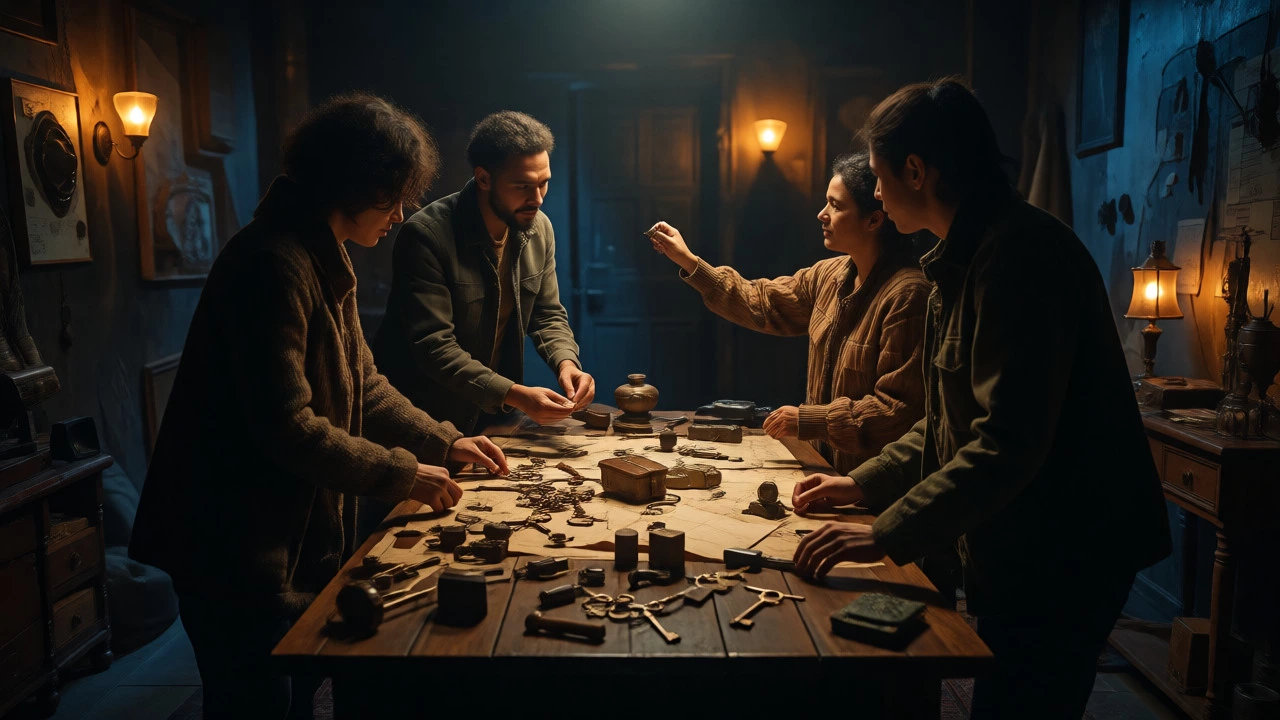
The biggest mistake novice teams make is diving into puzzles immediately upon entering the room. Stop. Take two minutes. Spread all the items you have found on a central table or surface. Group them by type: keys, locks, notes, physical objects, and digital devices.
Why does this matter? Because many puzzles require combining items from different parts of the room. If you keep your discoveries hidden in your pockets or scattered across shelves, you lose the big picture. A centralized inventory prevents duplicate efforts. If three people are trying to open the same padlock with the same wrong code, you have wasted fifteen seconds per person. That adds up fast.
The Power of Parallel Processing
Escape rooms are designed for multiple brains working simultaneously. If everyone is crowded around one puzzle, you are bottlenecking yourself. Divide and conquer. Assign roles based on strengths, not just enthusiasm.
- The Scanner: Looks for hidden compartments, UV lights, and overlooked details.
- The Decoder: Good with patterns, ciphers, and math. Handles the logic puzzles.
- The Organizer: Keeps track of solved puzzles and ensures no clue is forgotten.
- The Physical: Handles heavy lifting, reaching high places, or manipulating tricky mechanisms.
Rotate these roles if needed, but ensure that at any given moment, no more than two people are focused on a single active puzzle. Everyone else should be searching or waiting for a new lead.
Ask for Hints Early (and Often)
Pride kills time. Many teams hesitate to ask the Game Master for help because they think it means they are failing. It doesn't. It means you are managing resources efficiently. Most modern escape rooms allow unlimited hints, though some penalize your score slightly.
Use hints strategically. Don't wait until the last five minutes. If you are stuck on a puzzle for more than ten minutes, ask for a nudge. A good hint points you in the right direction without giving away the answer. This keeps the momentum going. Staring at a blank wall for twenty minutes feels productive, but it is usually a waste of valuable seconds.

Understand the Logic of Locks
Not all locks are created equal. Knowing the types helps you approach them correctly.
| Lock Type | Typical Clue Source | Strategy |
|---|---|---|
| Padlock (3-4 Digits) | Numbers written on walls, books, or objects. | Look for order indicators (arrows, colors) before guessing. |
| Directional Lock | Symbols, arrows, or maps. | Trace the path physically; don't rely on mental mapping alone. |
| Keyhole Lock | Hidden keys, magnetic strips, or containers. | Check every container once you find a key; test it immediately. |
| Combination Wheel | Cipher keys, color codes, or alphabetical sequences. | Isolate the variable. Change one dial at a time to test hypotheses. |
Notice a pattern? The clue almost always precedes the lock. If you find a lock first, search for the corresponding clue. If you find a clue first, look for where it fits. Never try random combinations unless you have exhausted all logical options.
Watch Out for Red Herrings
Game designers love to distract you. A bookshelf full of encyclopedias might just be decoration. A painting might hide nothing. How do you know when to move on?
Follow the principle of "least effort." If interacting with an object requires significant effort (moving heavy furniture, decoding complex text) but yields no immediate feedback, pause. Check if there are simpler interactions available elsewhere. However, don't dismiss things too quickly either. Sometimes the effort is part of the puzzle. Use your gut instinct: if a puzzle feels forced, step back and look at the broader context.
Time Management Tactics
Most escape rooms give you sixty minutes. Here is a realistic timeline for a winning team:
- 0-5 Minutes: Rapid search. Grab everything. Identify major interactive elements.
- 5-15 Minutes: Organization. Sort items. Start easy puzzles to build confidence.
- 15-45 Minutes: Deep work. Tackle medium-to-hard puzzles. Ask for hints if stuck.
- 45-55 Minutes: Final assembly. Combine remaining clues. Open final locks.
- 55-60 Minutes: Exit. Celebrate or panic.
If you reach the 45-minute mark with only half the room explored, you are in trouble. Speed up the search phase. Ignore minor details. Focus on large, interactive objects.

Team Dynamics Matter More Than IQ
I have seen groups of engineers fail because they over-analyzed. I have seen groups of teenagers succeed because they communicated clearly. The best teams share three traits:
- Humility: Willingness to admit when you are stuck.
- Clarity: Ability to explain findings simply.
- Patience: Respecting others' thought processes without interrupting constantly.
Avoid the "Lone Wolf" syndrome. One person dominating the room creates resentment and bottlenecks. Encourage quieter members to speak up. Sometimes the shyest person notices the most critical detail because they are observing rather than acting.
Preparation Outside the Room
You can prepare before you even enter. Wear comfortable clothes and shoes. Avoid wearing accessories that could get caught or lost. Leave bags outside. Bring a notebook and pen if allowed-writing down codes saves mental energy.
Also, check the difficulty rating. If you are new, start with intermediate rooms. Advanced rooms often require specific knowledge (like Morse code or historical facts) that can frustrate beginners. Building confidence in easier rooms teaches you the mechanics of game design, which translates directly to harder challenges later.
What If You Fail?
Failing is part of the fun. Did you miss a clue? Was the puzzle poorly explained? Did someone hog the spotlight? Debrief after the game. Discuss what worked and what didn't. This reflection turns a failed attempt into a learning experience. Next time, you will be sharper.
Remember, escape rooms are collaborative storytelling experiences disguised as puzzles. The goal isn't just to escape; it's to enjoy the process with your friends. Keep it light, keep talking, and keep moving.
Do I need special skills to play escape rooms?
No. Escape rooms are designed for general audiences. While some may involve basic math, language, or logic, they rarely require specialized academic knowledge. Teamwork and observation are far more important than individual expertise.
Can we use our phones during the game?
Usually, yes, but rules vary by venue. Some rooms prohibit phones to prevent cheating or distractions. Others allow them for taking photos of clues or using calculator apps. Always ask the Game Master before starting.
What is the ideal team size for an escape room?
Four to six players is typically optimal. Fewer than four can leave gaps in perspective and slow down parallel processing. More than six often leads to overcrowding, noise, and confusion, reducing overall efficiency.
Are escape rooms scary?
It depends on the theme. Horror-themed rooms may include jump scares, darkness, or actors. Standard adventure or mystery rooms are generally safe and non-threatening. Check the description beforehand if you are sensitive to suspense.
How many hints should we expect to use?
There is no standard number. Successful teams might use zero hints, while others use several. Using hints is normal and often necessary to stay within the time limit. Prioritize progress over pride.