Escape Room Success Probability Calculator
Configure Your Team
Select Strategies You Will Use:
Configure your team settings and click calculate to see your odds.
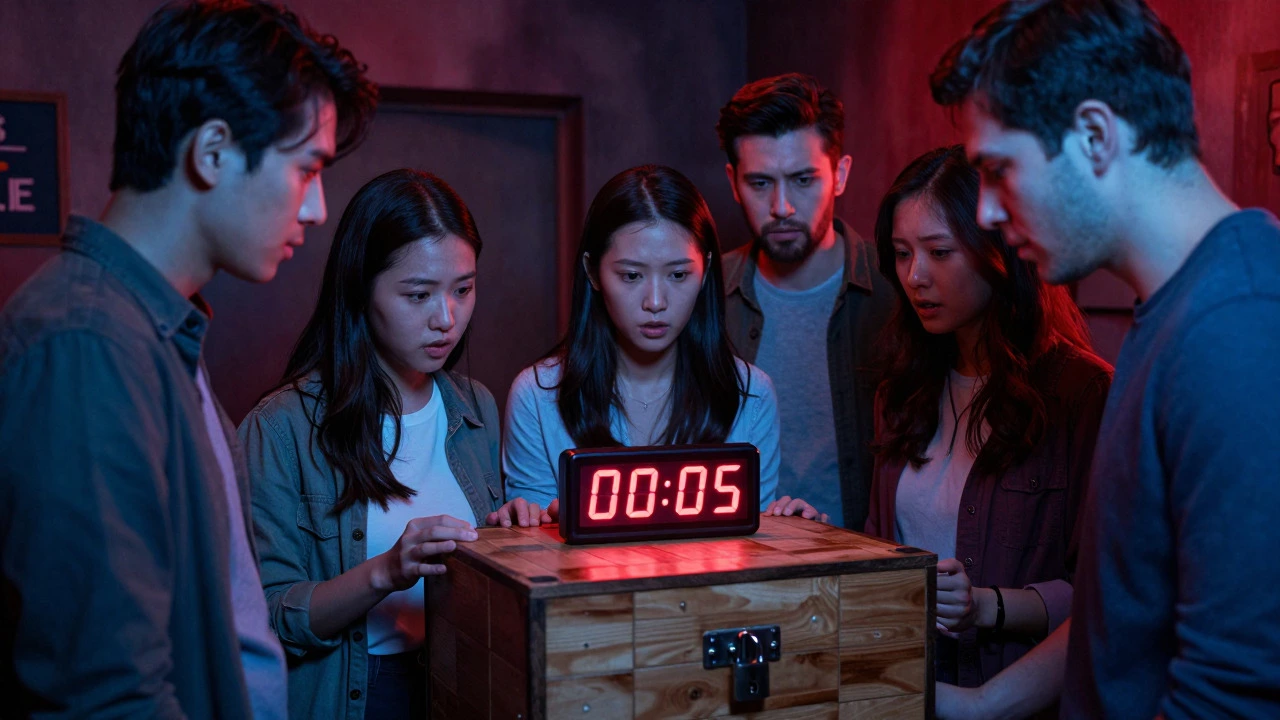
Imagine this: The clock hits 00:00. The red buzzer sounds. Your team is still standing there, staring at a locked box with a combination lock you just couldn't crack. Panic sets in. Did you waste your money? Is the game over forever? What happens next?
If you’ve never experienced an escape room timeout, it’s easy to imagine the worst-case scenario. Maybe you get dragged out by security guards? Perhaps you have to pay double? The truth is much more friendly-and actually quite standard across the industry.
The Immediate Aftermath: Game Masters Step In
When the timer runs out, nothing catastrophic happens. Instead, the door opens, and the game master walks in. This person has been watching you through cameras (and sometimes microphones) for the entire hour. They know exactly where you got stuck.
In most modern escape rooms, the game master doesn’t just walk in and say, "You lost." They usually offer a quick debrief. They’ll show you the puzzle you missed, explain the logic behind it, and often let you solve that final piece if you want to. It’s not about shaming you; it’s about ensuring you leave feeling satisfied, even if you didn’t beat the clock.
Think of it like a tour guide showing you the hidden gems you missed during a city walk. You didn’t see everything, but now you know what was there. Most players appreciate this because it removes the frustration of leaving with a mystery unsolved.
Do You Get a Refund?
This is the question everyone worries about. Here’s the short answer: Usually, no. But it depends on the venue and the circumstances.
Most escape room companies operate on a model where you are paying for the experience, the props, the staff time, and the venue rental-not just for the victory. Just like going to a movie, you don’t get your ticket back if you fall asleep halfway through. The experience happened; you just didn’t achieve the specific goal.
However, there are exceptions:
- Technical Failures: If a prop breaks, a light goes out, or the electronic lock fails due to company error, many venues will offer a free re-play or a partial refund.
- Staff Errors: If the game master gave you incorrect information or accidentally locked you out of a necessary clue, they will almost always make it right.
- "First-Timer" Discounts: Some newer or highly competitive venues offer a "win or replay free" policy to attract customers. Check their website before booking.
If you’re worried about losing money, call ahead. Ask them directly: "What is your policy if we fail?" Transparency here builds trust.
Why Do So Many Teams Fail?
You might be surprised to learn that failing is normal. Industry averages suggest that between 40% and 60% of teams do not escape within the allotted time. You are definitely not alone if you struggle.
There are several reasons why groups hit a wall:
- Poor Communication: One person finds a key, but doesn’t tell anyone else. Meanwhile, three people are shaking a vase looking for clues. Information silos kill escape room progress.
- Tunnel Vision: Focusing too hard on one complex puzzle while ignoring obvious, simple ones. Escape rooms are designed so that solving small puzzles unlocks big ones. If you’re stuck on the big one, go back to the basics.
- Not Using Hints: Many teams feel pride in not asking for help. But hints are part of the game design. They keep the momentum going. Ignoring them leads to stagnation.
- Wrong Group Size: Too few people mean not enough hands to search simultaneously. Too many people can lead to chaos and talking over each other.

The Psychology of Failure in Escape Rooms
It feels bad to lose, right? That’s human nature. We’re wired to seek completion. When the buzzer sounds, you might feel a spike of cortisol-the stress hormone. But here’s the good news: that feeling passes quickly.
Studies in recreational psychology show that shared challenges, even failed ones, build stronger social bonds than easy wins. Why? Because you had to communicate, argue, collaborate, and laugh under pressure. The memory of "remember when we were all trying to decode that cipher and laughed until our sides hurt" lasts longer than "we escaped in 5 minutes."
Also, consider the narrative. In a horror-themed escape room, escaping isn’t always the point. Sometimes, surviving the story is the win. In a mystery-themed room, solving the case matters more than the clock. Context changes how you perceive failure.
How to Avoid Failing Next Time
If you want to improve your odds, treat your next escape room like a strategy game. Here are actionable tips:
- Assign Roles: Have one person manage the timer, one person organize found items, and others split into search pairs. Structure reduces chaos.
- Search Systematically: Don’t just grab things randomly. Check drawers top-to-bottom. Look under rugs. Turn objects over. Most clues are hidden in plain sight, not in complex mechanisms.
- Use All Five Senses: Listen for clicks. Smell for scent clues (some rooms use smell as a hint). Feel for temperature differences. Touch for textures. Visuals aren’t everything.
- Ask for Hints Early: Don’t wait until 10 minutes are left. If you’re stuck for more than 3-5 minutes, ask. The game master wants you to progress, not sit idle.
- Play the Easy Puzzles First: Clear the board of simple tasks. This gives you more tools (keys, codes, items) to tackle the harder puzzles later.

Comparison: Winning vs. Losing Experience
| Aspect | Winning (Escaping) | Losing (Timeout) |
|---|---|---|
| Emotional Outcome | Euphoria, pride, adrenaline rush | Frustration initially, then relief and curiosity |
| Social Bonding | Strong, based on shared success | Strong, based on shared struggle and humor |
| Memory Retention | High, but focused on the end result | Very high, focused on specific puzzles and interactions |
| Replay Value | Low (you already solved it) | Medium (you may want to try again to win) |
| Cost Effectiveness | Standard price paid | Standard price paid (unless technical fault) |
What If You Hate Losing?
If the idea of failing stresses you out, choose wisely. Not all escape rooms are created equal. Some are designed to be nearly impossible without perfect teamwork. Others are more casual and forgiving.
Look for these cues when booking:
- Difficulty Rating: Choose "Easy" or "Beginner" rooms. These are designed for first-timers and have higher success rates.
- Theme: Light-hearted themes (like a spy mission or treasure hunt) feel less punitive than dark themes (like a prison break or horror house).
- Group Composition: Play with friends who are patient and collaborative. Avoid playing with people who dominate or criticize.
Remember, escape rooms are entertainment, not exams. No one is grading you. The goal is fun, not perfection.
The Future of Escape Room Design
As the industry evolves, designers are becoming more aware of player frustration. New trends include:
- Dynamic Difficulty: Some advanced rooms adjust puzzle complexity based on how well you’re doing. If you’re struggling, the system subtly makes things easier.
- Multiple Endings: Instead of a binary win/lose, some rooms offer different narratives based on your choices. Even if you don’t escape, you might uncover a secret backstory.
- Hybrid Experiences: Combining physical props with digital apps allows for more flexible hint systems and interactive storytelling.
These innovations aim to reduce the sting of failure and increase engagement. The industry is moving towards inclusivity, ensuring that players of all skill levels enjoy the experience.
Can you stay in the escape room after time runs out?
Usually, no. For safety and scheduling reasons, you must leave once the timer ends. However, the game master will often let you solve the final puzzle briefly before exiting.
Is it embarrassing to fail an escape room?
Not at all. Game masters see dozens of teams every week. Most fail. It’s part of the challenge. They are trained to be supportive, not judgmental.
Do you get a discount if you fail?
Rarely. Unless the failure was due to a technical error or staff mistake, you typically pay full price. Always check the venue’s specific policy beforehand.
What should I do if my group is stuck?
Ask for a hint! Use the intercom or signal the camera. Hints are designed to keep the game moving. Don’t let pride stop you from enjoying the experience.
Are some escape rooms harder than others?
Yes. Venues usually rate rooms by difficulty (Easy, Medium, Hard). Beginners should start with Easy rooms to build confidence and learn common puzzle types.
Can children fail escape rooms?
Children can participate, but family-friendly rooms are designed to be accessible. If a child gets frustrated, parents should encourage teamwork rather than forcing solutions.