Beginner Escape Room Readiness Checker
Are you ready to tackle your first escape room? Check off the statements below that apply to your upcoming game night. This tool helps you gauge if you're setting yourself up for success or potential frustration.
Your Game Night Profile
0%
Check the boxes above and click calculate to see your readiness level.
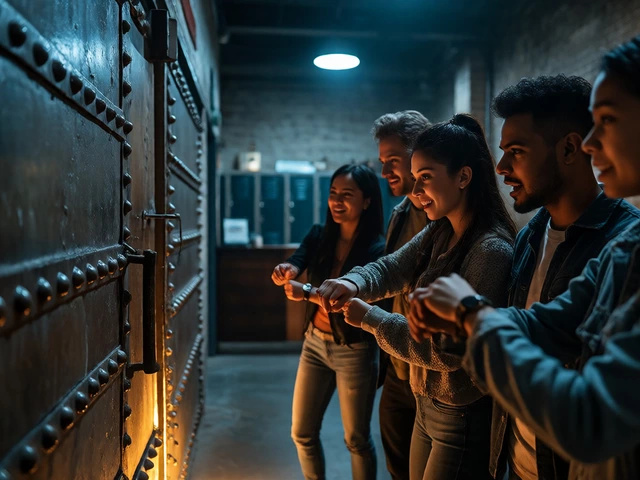
You walk into a dimly lit room, the door clicks shut behind you, and suddenly you’re locked in with five strangers (or friends) and sixty minutes on the clock. Your heart rate spikes. Is this going to be fun, or are you about to spend an hour staring at a padlock while everyone else panics? If you’ve never played before, that anxiety is normal. The big question everyone asks their host before booking is simple: are beginner escape rooms hard?
The short answer? No, not if you pick the right one. But "hard" is subjective, and a bad choice can turn a great team-building activity into a frustrating memory test. A well-designed beginner room should feel like a satisfying challenge, not an impossible exam. It’s about finding that sweet spot where puzzles click into place because of logic, not because you happened to know the atomic weight of gold.
Understanding Difficulty Tiers
Most reputable venues categorize their rooms by difficulty, usually using a scale from 1 to 5 or labels like "Easy," "Medium," and "Hard." This isn’t just marketing fluff; it reflects the complexity of the mechanics and the abstractness of the clues. For a first-timer, aiming for a level 1 or 2 room is crucial. These rooms rely on physical interaction-finding keys, opening boxes, connecting wires-rather than complex lateral thinking riddles that require years of gaming experience.
| Level | Description | Best For | Common Pitfalls |
|---|---|---|---|
| Beginner (1-2) | Linear progression, clear visual cues, heavy use of locks and props. | First-time players, families, corporate teams. | Ignoring obvious objects; overthinking simple tasks. |
| Intermediate (3) | Mixed linear and non-linear paths; requires some pattern recognition. | Players with 1-5 games under their belt. | Getting stuck on side quests; poor communication. |
| Advanced (4-5) | Abstract puzzles, hidden mechanisms, minimal guidance. | Veterans, puzzle enthusiasts, competitive teams. | Burnout; frustration leading to early exit. |
What Makes a Room "Beginner-Friendly"?
A good beginner room respects your lack of context. You don’t know how these places work yet, so the game master needs to guide you subtly. Look for rooms described as having "linear gameplay." This means Puzzle A leads directly to Clue B, which opens Box C. There’s no ambiguity about what to do next. In contrast, advanced rooms often throw ten puzzles at you simultaneously, forcing you to decide which ones matter. That decision fatigue is exhausting when you’re still trying to figure out how to hold a flashlight properly.
Another key indicator is the presence of physical locks versus digital codes. While both are fine, physical locks provide immediate tactile feedback. When you find a key and hear the *click* of a lock opening, you get a dopamine hit that keeps momentum going. Digital codes can sometimes lead to "input fatigue," where you try twenty combinations because the clue was vague. Beginners thrive on clear cause-and-effect relationships.
The Role of Game Masters
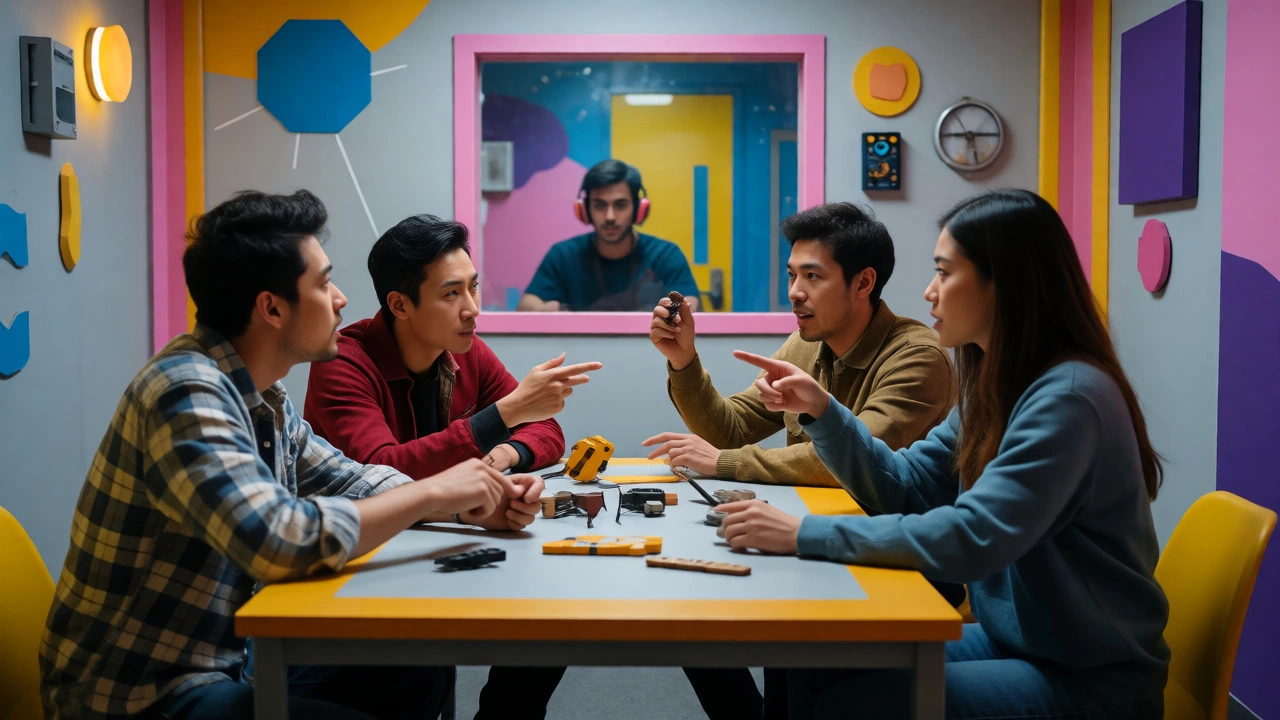
Here’s a secret most players miss: the difficulty of an escape room is heavily influenced by the Game Master who monitors the camera feeds and provides hints. In a beginner-friendly venue, the GM acts more like a helpful tour guide than a strict examiner. They watch your body language. If three people are staring at the same wall for two minutes, they’ll intervene with a nudge rather than a full solution.
Before you book, check reviews specifically mentioning the GMs. Phrases like "helpful without giving away answers" are gold. Avoid venues where reviews complain about "rude staff" or "no hints allowed." For your first time, you want a safety net. Knowing someone is watching and ready to help lowers the stakes significantly, allowing you to relax and actually enjoy the immersion.

Team Dynamics Matter More Than IQ
You might think you need a math whiz or a trivia buff to succeed. Wrong. Escape rooms are primarily tests of communication and organization. The hardest part for beginners isn’t solving the puzzle; it’s realizing that Person A found a clue that Person B needs to solve their puzzle. This is called "cross-pollination," and it’s where most first-timers fail.
- Shout out findings: Don’t just look at a map silently. Say, "Hey, I found a map with red circles!"
- Assign roles loosely: One person organizes found items (keys, cards), another focuses on searching, and others tackle specific puzzles.
- Ask for help early: Waiting until the last five minutes to ask for a hint is a rookie mistake. Ask when you’re stuck for more than three minutes.
If your group is quiet, the room will feel twice as hard. If your group talks constantly, even difficult puzzles become manageable. Encourage everyone to speak up, even if they think their idea is stupid. Often, the "stupid" idea is the missing link.
Common Myths About Beginner Rooms
Let’s bust a few myths that scare people away. First, you don’t need to be physically fit. Unless you’re playing a high-intensity action room (which you shouldn’t for your first go), you’re mostly walking, bending, and reaching. Second, you don’t need to be smart. You need to be observant. Many puzzles rely on noticing color patterns, counting objects, or reading text carefully. Attention to detail beats raw intelligence every time.
Third, failure is part of the fun. Statistically, about 40-60% of groups fail their first escape room. And guess what? Most of them had a great time anyway. The goal isn’t necessarily to win; it’s to engage with the story and each other. If you run out of time, you leave knowing exactly what you’d do differently next time. That curiosity drives repeat visits.
How to Prepare for Your First Game
Preparation doesn’t mean studying physics. It means setting expectations. Arrive ten minutes early to meet your team and the GM. Use the restroom beforehand-there’s no pause button. Wear comfortable shoes and clothes you don’t mind getting slightly dusty. Some rooms involve crawling under tables or moving props, so avoid tight skirts or stiff jeans.
Also, manage your phone usage. Put it away completely. Taking photos during the game breaks immersion and slows down search times. Save the celebration photos for after you escape. Finally, trust the process. If a puzzle seems too easy, it probably is. Overthinking is the enemy of progress. If you see a blue box and a blue key, try the blue key in the blue box. Don’t wonder if the blue represents the ocean and thus you need to look for water-related clues. Start simple.
Choosing the Right Venue in Wellington
Since I’m based here in Wellington, New Zealand, I can tell you that local venues vary widely. Look for places that explicitly offer "introductory" packages or have dedicated beginner rooms. Check platforms like TripAdvisor or Facebook reviews for recent comments about "first-time experiences." If multiple reviewers mention feeling overwhelmed, steer clear. Conversely, if you see stories about groups laughing through their mistakes, that’s a sign of a healthy, supportive environment.
Consider the theme, too. Horror themes might distract nervous beginners with jump scares, pulling focus from the puzzles. Mystery or adventure themes are generally safer bets for a first attempt. You want your brain focused on logic, not adrenaline.
Do I need special skills to play an escape room?
No special skills are required. Basic literacy, observation, and the ability to communicate with your team are sufficient. You do not need to be a mathematician, historian, or engineer. Most puzzles rely on common sense and pattern recognition.
What happens if we get stuck?
You can request a hint from the Game Master via a radio or screen. Hints are typically tiered: a gentle nudge, a specific direction, or the direct solution. Using hints does not disqualify you; it simply adjusts the difficulty to keep the game moving.
Is it safe for claustrophobic people?
Yes, most modern escape rooms are spacious and well-lit enough to prevent panic. Doors are usually unlocked from the inside for emergency exits. If you feel uncomfortable, inform the GM beforehand; they can monitor you closely and allow you to step out briefly if needed.
Can children participate?
Many rooms are family-friendly, but age restrictions apply. Typically, children under 12 need adult supervision. Check the specific room's age recommendation. Some puzzles may require reading skills or logical reasoning that younger kids haven't developed yet.
How long should a beginner stay in the room?
Standard sessions last 60 minutes. However, many venues offer 45-minute introductory rooms or extended 75-minute sessions for larger groups. For a first-timer, a 60-minute standard room is ideal-it provides enough time to explore without causing fatigue.