Exhibition Navigator
Not sure what kind of show you're looking at—or want to plan? Answer three quick questions to find the exhibition type that matches your experience.
Exhibition Type
TypeDescription goes here.
Why it fits:
Reasoning...
Pro Tip:
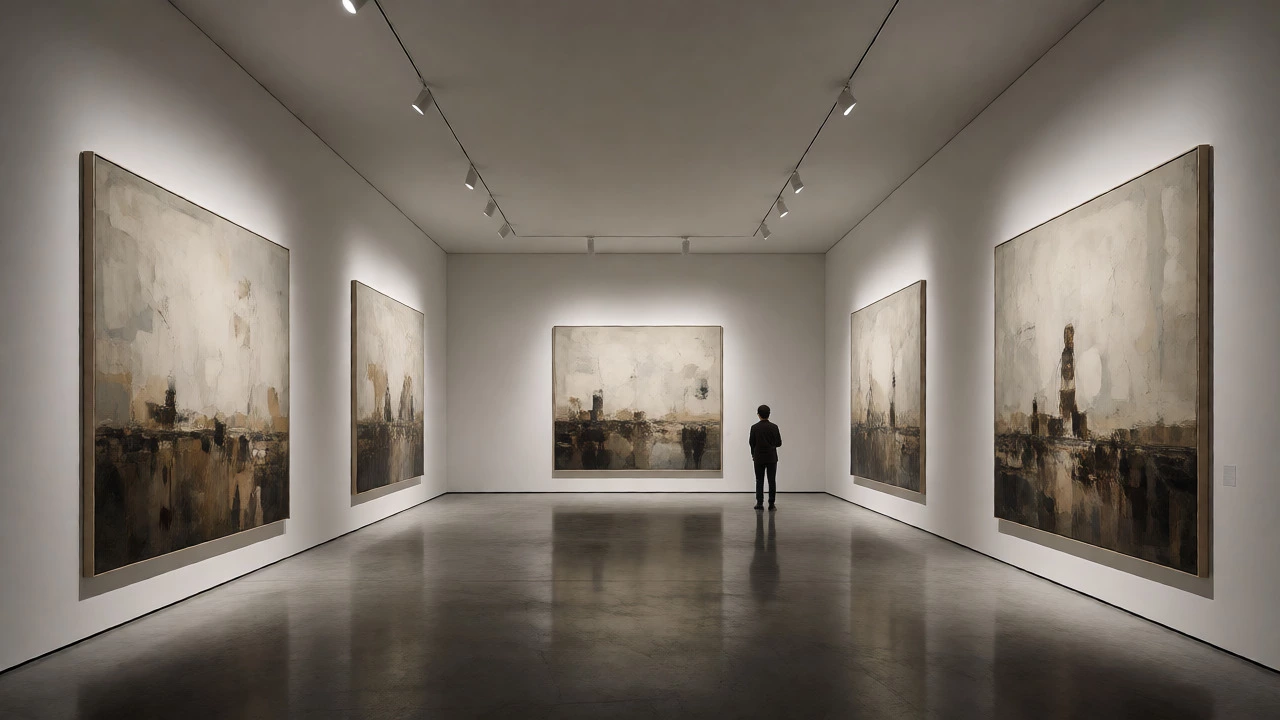
You walk into a gallery. The lights are dim, the floor is polished concrete, and there’s a painting on the wall that makes you stop dead in your tracks. But have you ever wondered why it’s there? Is it because the artist is famous? Because it fits a specific theme? Or because a curator decided these three paintings talk to each other?
Art exhibitions aren’t just random collections of pretty pictures hung up for sale. They are carefully constructed experiences, each with a different purpose, audience, and set of rules. Whether you’re an artist trying to get work shown, a student studying art history, or just someone who wants to know what they’re looking at next time they visit the Museum of New Zealand Te Papa Tongarewa or a local gallery, understanding the types of shows helps you read the room.
The Quick Rundown: Key Exhibition Types
Before we break down the details, here is the cheat sheet. If you only remember five things, make them these:
- Solo Exhibition: One artist, one vision. It’s about depth and consistency.
- Group Show: Multiple artists, often sharing a theme or medium. It’s about variety and dialogue.
- Thematic Exhibition: Curated around a specific idea, concept, or historical period. The art serves the story.
- Retrospective: A look back at an artist’s entire career. It’s about legacy and evolution.
- Installation Show: Immersive environments where the space itself is part of the artwork.
Solo Exhibitions: The Deep Dive
A solo exhibition is exactly what it sounds like: a show featuring work by a single artist. This is often considered the holy grail for emerging artists because it gives them total control over the narrative. There’s no competing voice, no jarring stylistic clashes. You see the world through one pair of eyes.
Why do galleries love them? It’s easier to market. When you promote a show, you’re promoting a brand-the artist. For the viewer, it offers a cohesive experience. If you go to a solo show of a sculptor who works exclusively in rusted steel, you expect rusted steel. You won’t be surprised by watercolors. This predictability allows for a deeper engagement with the artist’s technique and message.
However, solo shows carry high stakes. If the body of work isn’t strong enough to fill a room, the emptiness feels loud. Artists usually need to produce a significant volume of new work-often 10 to 20 pieces-to sustain interest over a month-long run. It’s a test of stamina as much as creativity.
Group Shows: Dialogue and Diversity
If a solo show is a monologue, a group exhibition is a debate. These shows feature work from two or more artists. Historically, group shows were how galleries introduced new talent alongside established names. Today, they are powerful tools for curators to highlight trends or spark conversations between disparate styles.
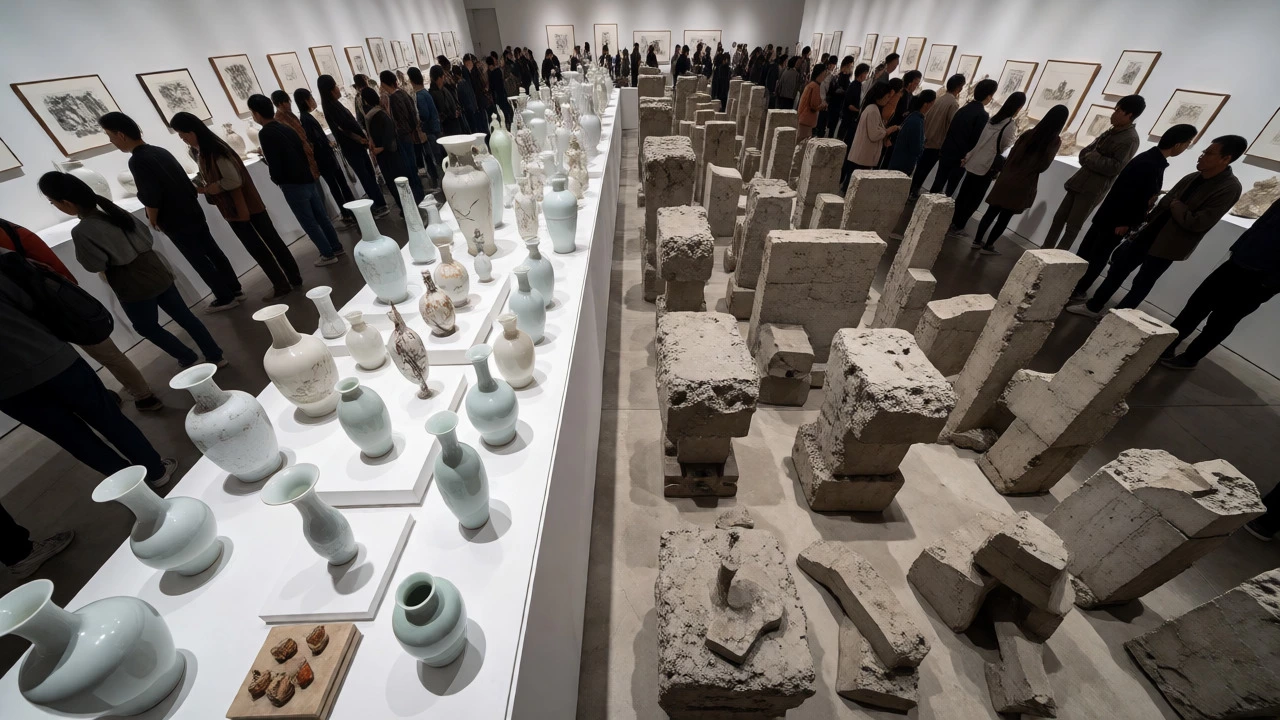
The magic of a good group show lies in the juxtaposition. Imagine placing a delicate, traditional porcelain vase next to a brutalist concrete sculpture. Neither piece changes physically, but their meaning shifts when placed side-by-side. The vase might feel fragile; the concrete might feel oppressive. That tension is what curators hunt for.
There are different flavors of group shows:
- Open Juried Shows: Any artist can submit work, and a jury picks the winners. Great for exposure, but quality varies wildly.
- Curated Group Shows: A curator invites specific artists to create work for a specific concept. High cohesion, higher prestige.
- Alumni Shows: Featuring former students or residents of a studio program. Good for community building.
For viewers, group shows offer variety. You might not connect with every piece, but you’ll likely find something that resonates. It’s also a great way to discover new artists you’ve never heard of before.
Thematic Exhibitions: Ideas First
In a thematic exhibition, the art is secondary to the idea. The curator starts with a question or a concept-say, “How does climate change affect coastal communities?”-and then hunts for artworks that answer it. The artists might be from different centuries, use different mediums, and have completely different political views, but they all serve the theme.
This type of show is common in museums rather than commercial galleries. Think of the Tate Modern or the Metropolitan Museum of Art. They use thematic shows to educate the public. You aren’t just looking at beauty; you’re learning history, sociology, or philosophy.
The challenge here is balance. A bad thematic show feels like a lecture with decorations. A good one lets the art speak for itself while subtly guiding your interpretation. Labels and wall texts become crucial tools here, providing context that the visual alone can’t convey.
Retrospectives: The Career Arc
A retrospective is a major event. It’s a comprehensive survey of an artist’s career, usually organized chronologically. These shows require massive resources. Museums have to borrow works from private collectors, other museums, and estate foundations. Insurance alone can cost hundreds of thousands of dollars.
Why bother? Because retrospectives cement legacy. Seeing an artist’s early sketches next to their mature masterpieces reveals their growth. You see the failures, the experiments, and the breakthroughs. It humanizes the genius. For example, seeing Picasso’s blue period works next to his cubist phase shows how radically he reinvented himself.
These shows are rare. Most artists only get one during their lifetime, if they’re lucky. For the viewer, it’s a pilgrimage. You’re witnessing the culmination of decades of labor.
Installation and Site-Specific Shows
Not all art hangs on walls. An installation exhibition transforms the entire space. The artwork interacts with the architecture, lighting, sound, and even the temperature of the room. You don’t just look at it; you walk through it, touch it, or stand inside it.
Site-specific art takes this further. The work is created for a particular location and cannot be moved without losing its meaning. If you move a site-specific mural from a subway station to a white cube gallery, it loses its context. The grit of the subway tiles, the noise of the trains-it’s all part of the piece.
These shows are immersive and often Instagram-friendly, which drives foot traffic. But they are expensive to produce and maintain. They require structural engineers, electricians, and specialized conservators. For the viewer, they offer a visceral experience that traditional painting rarely matches.
Comparing Exhibition Types
To help you decide which type of show suits your interests (or your artistic goals), here’s a breakdown of the key differences.
| Feature | Solo Exhibition | Group Exhibition | Thematic Exhibition | Retrospective |
|---|---|---|---|---|
| Primary Focus | One Artist’s Vision | Dialogue Between Artists | A Specific Concept/Idea | An Artist’s Career Arc |
| Typical Venue | Galleries, Studios | Galleries, Community Centers | Museums, Biennials | Major Museums |
| Viewer Experience | Deep, Cohesive | Variety, Contrast | Educational, Narrative | Historical, Reflective |
| Cost to Produce | Low to Medium | Low to Medium | Medium to High | Very High |
| Best For | Establishing Brand | Networking & Discovery | Cultural Commentary | Legacy Building |

How to Navigate an Exhibition Like a Pro
Knowing the type of show changes how you should approach it. Here are some practical tips:
- Read the Wall Text: In thematic shows, the curator’s essay sets the stage. Skip it, and you might miss the point entirely.
- Check the Dates: Retrospectives and major museum shows often have timed entry. Book ahead.
- Look for Consistency: In a solo show, ask yourself: Does this feel like one mind at work? If it feels scattered, the artist might have stretched too thin.
- Spot the Juxtaposition: In group shows, look for pairs of works that seem unrelated. Why did the curator put them together? That’s where the conversation happens.
The Role of the Curator
You can’t talk about exhibitions without talking about curation. The curator is the director of the film. They choose the cast (artists), the script (theme), and the set design (layout). Their job is to create meaning through arrangement.
Good curation is invisible. You shouldn’t notice the curator; you should just feel guided. Bad curation feels forced. If you leave a show feeling confused or annoyed, the curator failed to bridge the gap between the art and you.
In recent years, the role has expanded. Curators now manage digital archives, virtual tours, and social media campaigns. The exhibition doesn’t end when the doors close; it lives online. Platforms like Artsy and institutional websites extend the life of a show, allowing global audiences to engage with it long after the physical run ends.
Frequently Asked Questions
What is the difference between a gallery and a museum exhibition?
Galleries are typically commercial entities focused on selling art, often hosting solo or group shows to promote living artists. Museums are non-profit educational institutions that collect, preserve, and exhibit art for the public good. Museum exhibitions are often thematic or historical and may involve borrowing works from other institutions, whereas gallery shows usually feature available inventory.
How long do art exhibitions usually last?
Commercial gallery shows typically run for 4 to 6 weeks. Major museum exhibitions can last anywhere from 3 to 6 months, depending on loan agreements and visitor demand. Biennials and large-scale festivals might run for several months to accommodate international travelers.
Can I attend a solo exhibition if I don't know the artist?
Absolutely. Solo exhibitions are excellent places to discover new artists. Galleries often host opening receptions where you can meet the artist and hear about their process. Don’t let lack of familiarity stop you; sometimes the most rewarding experiences come from encountering unknown voices.
What is a 'juried' exhibition?
A juried exhibition is one where artists submit their work for consideration, and a panel of experts (the jury) selects which pieces will be included. This is common in community arts centers and regional competitions. It’s less curated than a museum show and more democratic, though quality can vary significantly.
Are installation exhibits permanent?
Most installation exhibits are temporary due to the complexity and cost of maintaining them. However, some site-specific installations become permanent fixtures of a building or public space. Always check the signage or the venue’s website to see if the work is part of the permanent collection or a limited-time commission.