Outdoor Play Activity Planner
Select your current conditions and goals to get tailored suggestions for unstructured outdoor fun.
Rough & Tumble
Energy & ConfidenceSensory Play
Calm & FocusConstructive
Problem SolvingDramatic
ImaginationYou know that look on a kid's face when they're stuck indoors for too long? It’s not just boredom; it’s a pent-up need to move, touch, and explore. Outdoor play is unstructured, self-directed activity that takes place in natural or built environments outside, allowing children to test limits and engage their senses. Unlike organized sports with coaches and rules, outdoor play is messy, unpredictable, and wildly effective for development. If you are wondering what actually happens when kids go outside without a script, you’re asking the right question. The answer isn't one specific game; it's a spectrum of behaviors ranging from high-energy running to quiet observation.
The Core Types of Outdoor Play
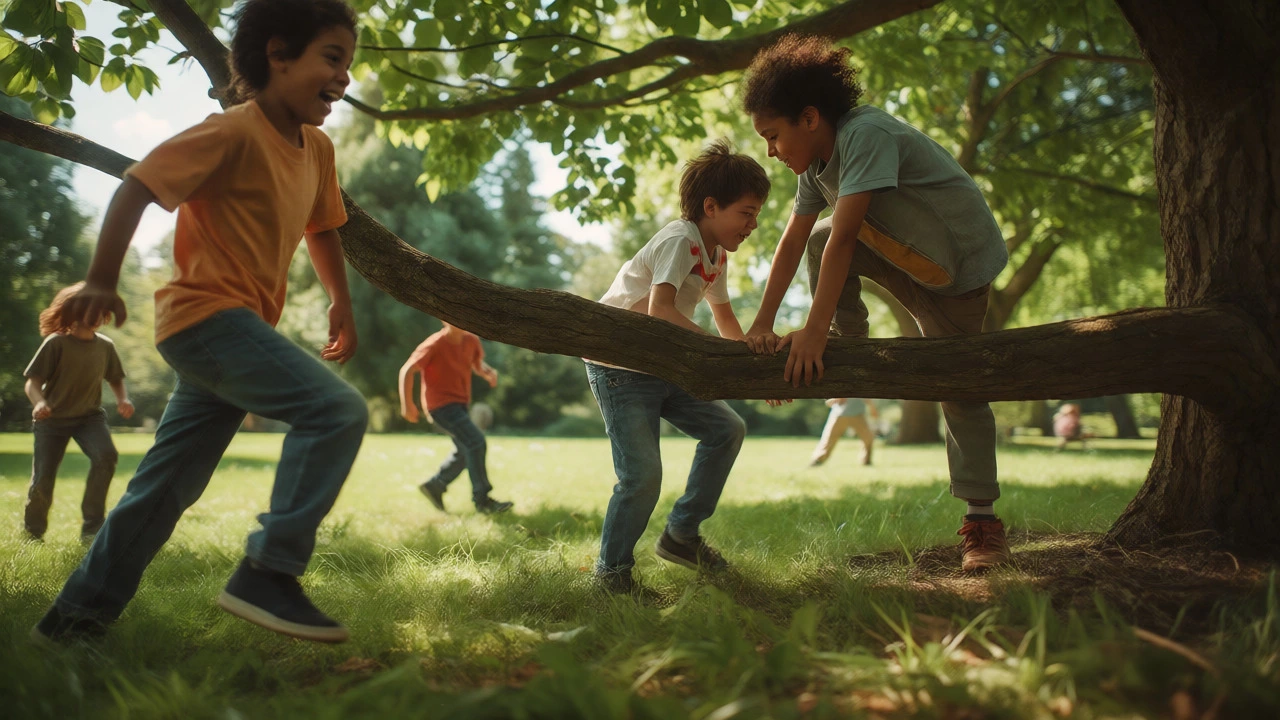
Experts generally categorize outdoor play into several distinct types. Understanding these helps you recognize value even when your child seems to be "doing nothing." Rough-and-tumble play is physical interaction like wrestling, chasing, or climbing that involves risk-taking and strength testing. This isn't fighting; it's negotiation. Kids learn body awareness and social cues by reading each other's signals during a mock chase. Then there is Sensory play, which engages the five senses through textures, sounds, and smells found in nature. Digging in mud, feeling bark, or listening to wind chimes falls here.
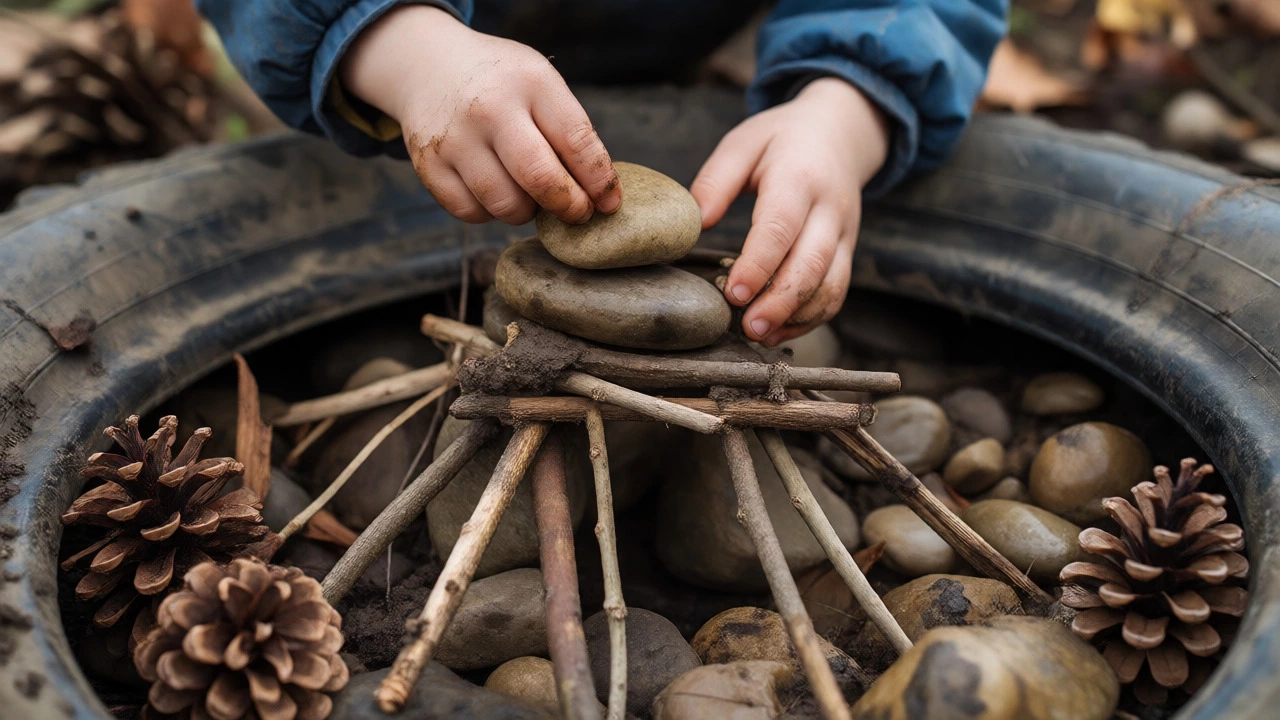
Don't overlook Constructive play, defined as building or creating something using available materials, such as stacking stones or building a fort from branches. This builds problem-solving skills. Finally, there is Dramatic play, where children role-play scenarios, acting out stories or imitating adults. A stick becomes a sword; a box becomes a castle. These categories aren't mutually exclusive-a single afternoon might include all four.
| Play Type | Primary Benefit | Typical Materials | Skill Developed |
|---|---|---|---|
| Rough-and-Tumble | Physical confidence & social bonding | Open space, grass, mats | Motor control, empathy |
| Sensory Play | Cognitive processing & calmness | Mud, water, leaves, sand | Observation, focus |
| Constructive Play | Planning & engineering logic | Sticks, blocks, loose parts | Problem-solving, creativity |
| Dramatic Play | Emotional expression & language | Costumes, props, imaginary items | Narrative skills, cooperation |
Why Unstructured Movement Matters More Than Organized Sports
We often push kids toward soccer practice or swim lessons because they feel productive. But organized activities have fixed rules and adult-led outcomes. Outdoor play lets kids write their own rules. When a group of friends decides how many jumps make a "win" over a puddle, they are practicing democracy and conflict resolution in real-time. Studies indicate that children who engage in frequent unstructured outdoor play show better attention spans in the classroom later. Why? Because they’ve already burned off excess energy and practiced self-regulation.
Consider the concept of "risky play." Parents often fear heights or speed, but controlled risk is essential. Climbing a tree teaches a child to assess structural integrity and their own weight distribution. If you remove all risk, you remove the learning opportunity. In Wellington, we see this daily in parks like Otari-Wilton's Bush, where kids navigate uneven terrain naturally. They learn to trust their bodies. Without this, anxiety can creep in because they never tested their limits in a safe environment.
Simple Activities That Require Zero Equipment
You don’t need a fancy playground to facilitate great outdoor play. Some of the best activities rely entirely on imagination and the environment. Here are concrete examples you can try today:
- Nature Scavenger Hunts: Give them a list: find something red, something smooth, something that crunches. This turns a walk into a mission.
- Shadow Tracing: On sunny days, use chalk to trace shadows of toys or people. Observe how they change over an hour. This introduces basic astronomy concepts without a textbook.
- Loose Parts Play: Gather sticks, stones, pinecones, and old tires. Let kids combine them however they want. One day it’s a bridge; the next, it’s a spaceship. This fosters deep creativity.
- Sound Mapping: Have them sit quietly for two minutes and draw a map of every sound they hear. Where did the bird come from? How far away was the car?
These activities cost nothing but time. They also scale easily. A toddler might just hold the stick; a ten-year-old might build a complex trap for imaginary creatures. The key is to step back. Resist the urge to say, "That’s not how you build a wall." Let it fall down. Let them rebuild it.
How Weather Changes the Play Landscape
Living in New Zealand means dealing with four seasons in one day. Rain shouldn’t stop outdoor play; it should change it. Wet weather invites different sensory experiences. Mud kitchens become popular hubs for social interaction. Puddles transform into oceans for toy boats. Windy days offer opportunities for kite flying or observing leaf movement. Dressing appropriately is half the battle. Good rain gear removes the parent’s hesitation. Once you’re warm and dry, the cold feels less like a barrier and more like part of the adventure.
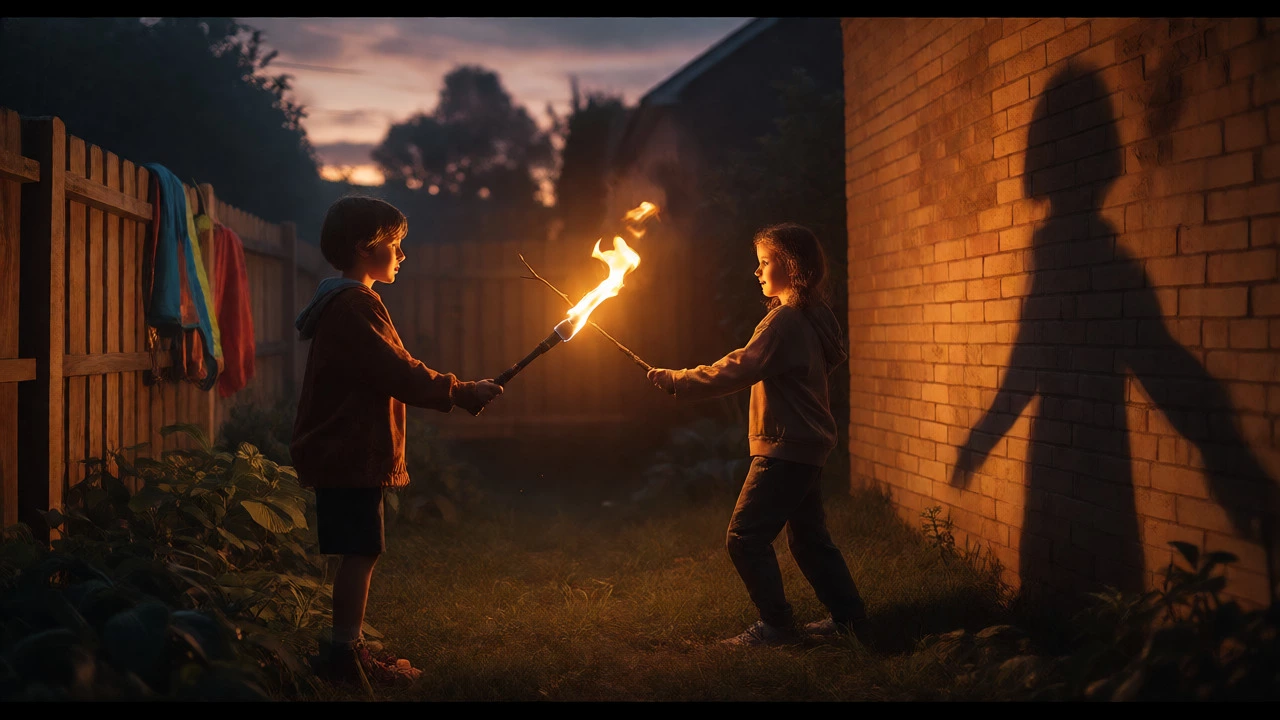
In winter, shorter days mean earlier darkness. Use torches (flashlights) to extend playtime. Shadow puppets on walls become dramatic theater. Summer brings heat management challenges. Water play is the obvious solution, but shade structures also encourage quieter constructive play under trees. Adapting to weather teaches resilience. Kids learn that discomfort is temporary and manageable.
Overcoming Common Barriers to Outdoor Play
Screen time is the biggest competitor. It’s easy to hand over a tablet because it’s quiet and instant. But screens provide passive entertainment, while outdoor play requires active engagement. To compete, you must make going outside appealing. Start small. Ten minutes counts. Often, once they start, they’ll stay for an hour. Another barrier is safety concerns. Urban spaces may lack green areas. Look for nearby reserves, school grounds after hours, or even large balconies. You can create micro-outdoor zones with potted plants and tactile surfaces.
Time pressure is another factor. We rush kids from school to dinner to homework. Try carving out "green time" before homework. Research suggests that physical activity boosts cognitive function for subsequent study sessions. Treat outdoor play as fuel for learning, not a distraction from it. Also, involve yourself minimally. Sit nearby and read your own book. Your presence provides security without dominating the narrative.
Building a Routine for Consistent Outdoor Time
Consistency beats intensity. Five minutes daily is better than three hours on Saturday. Create a ritual. After lunch, shoes go on. No questions asked. Make it non-negotiable like brushing teeth. Keep a dedicated bag by the door with essentials: spare socks, sunscreen, and a few loose parts like balls or chalk. Remove friction. If you have to search for boots, you won’t go.
Rotate locations to keep interest high. Monday at the local park, Tuesday at the beach, Wednesday in the backyard. Variety prevents boredom. Involve siblings or friends. Social motivation drives participation. If your child sees others playing, they want to join. Community playgroups can help here. Even if you live in an apartment block, finding one friend to meet in the courtyard makes a huge difference.
Is outdoor play necessary if my child plays video games?
Yes, absolutely. Video games offer cognitive stimulation but lack full-body proprioceptive input. Outdoor play engages balance, spatial awareness, and gross motor skills in ways screen-based activities cannot replicate. It also provides fresh air and natural light, which regulate sleep cycles and mood.
What if my child says they are bored outside?
Boredom is a precursor to creativity. Instead of solving the boredom immediately, wait. Often, within ten minutes, the child will invent a new game. If they persist, offer a simple prompt like "Can you find three things that are round?" rather than directing the entire activity.
How much outdoor play do children need daily?
Health guidelines generally recommend at least 60 minutes of moderate-to-vigorous physical activity daily for children. However, for developmental benefits, even 15-30 minutes of unstructured free play shows significant positive impacts on attention and emotional regulation.
Does outdoor play help with ADHD symptoms?
Many studies suggest that exposure to green spaces reduces symptoms of Attention Deficit Hyperactivity Disorder. Natural environments require less directed attention than urban settings, allowing the brain to rest and reset, improving focus afterward.
What are "loose parts" in outdoor play?
Loose parts are open-ended materials that can be moved, carried, combined, redesigned, lined up, and taken apart in multiple ways. Examples include sticks, stones, crates, fabric scraps, and tubes. They encourage higher levels of creativity than fixed playground equipment.